New Zealand, led by the 'honourable John Key' finally managed to get elected to the United Nations Security Council back in October 2014 (6 months ago now) ahead of Spain and Turkey. Key marketed our bid at the UN and around the Pacific as one that would provide representation for the small states, giving them a voice. A friendly big brother who would look after their interests.
It seemed to me that this was all really something of an ego-trip for Mr Key; simply giving him the chance to play with the big boys and feel good about himself.
So how has this played out ... this representation of the smaller states? Have they seen any benefits?
In early March 2015 it was revealed that the NZ GCSB has been spying on our Pacific Islands for some time and conducting 'mass collection', effectively collecting all electronic data available. There was then some debate about the legality of this, because NZ law makes it illegal for our Government to spy on NZ citizens without a warrant. We then had a series of debates about the rather fine distinction between 'mass data collection' and 'mass surveillance'. GCSB might be collecting data from New Zealand citizens in the Pacific, but they (apparently) filter this out somehow, so it is not 'surveillance' and remains legal according to NZ law. So we're all OK with that then ...(?)
The question still remains - how do our Pacific neighbours feel about being spied on? Now the fact that this is going on is public knowledge, does that allow them to feel more secure? There has been no real public debate about that in NZ. Yet again, its all about our own interests.
Saturday, 28 March 2015

Saturday, 28 February 2015
Frankly my dear ...
I recently had the privilege of reading a book written by a British author, Mathew Hopkins, entitled Unholy Islamic Mess (available on Amazon). This provides a humorous yet intelligent, and thought-provoking look at many facets of Muslim integration (or the lack of it) into Western nations. Hopkins is not an academic, nor a politician, and is not bound by conventional thinking. Yet he evidently knows his topic well and provides some radical and obviously tongue-in-cheek solutions to the issues. Obviously some of these ideas will never fly, but it is good to put them on the table and at least consider them. Hopkins reveals his religious views to be Deist, or as he terms it, 'a non-aligned believer'. There are occasionally weaknesses or logical flaws in his arguments but they are minor. However, the real strength of his book is also its greatest weakness - Hopkins presents logical options and hopes that logic and rationality will prevail; but religion is not based on logic and people do not make decisions based on logic - we are all ultimately driven by emotion.
Despite my misgivings about the title and initial expectations about the book, Hopkins is not bigoted, racist or patronising. Among many other issues, he appreciates the serious challenges that face apostates from Islam and goes as far as to suggest that the (Western/secular) State provides taxpayer funds to assist them with quite extensive support and rehabilitation programmes.
As an apostate myself, while I don't see this as ever likely to happen, it does highlight (again) the problem of the attitude of Western Kiwis to ex-Muslims. At its very best, when the topic is raised we just get a blank look, no questions, no helpful comments, no direct comments at all; just total indifference... *crickets chirping*... However, the more normal reaction, seems to be hostility and childish ridicule behind your back, yet within earshot. Most sadly this was true even of those I had previously considered to be friends. Personally, to date, I have received absolutely zero moral support. Quite the reverse in fact.
I can only describe this as odd. Kiwis totally failed to live up to my prior, perhaps naive, hopes and expectations of basic decency. Is this ignorance or arrogance on their part? If it is ignorance, it is wilful, since they have had endless opportunities to ask and discuss. Yet it was as if a switch was flicked and like the Borg Collective they simultaneously froze me out and I was treated as some kind of leper. All eye contact was avoided by them and an exclusion zone was imposed. Frankly they just don't give a damn about anyone or anything else outside their own comfortable little world. Given that an apostate cannot talk to Muslim community members or their own family about the topic either, this can be a little unsettling, shall we say. Trying to put an optimistic spin on it, perhaps this may be attributed to a misguided attempt at political correctness - a wish to avoid saying anything that could potentially offend.
However, in the case of my previous Borg 'friends' I don't think an optimistic view is justified. Friendship carries responsibilities with it. They had a choice, they chose poorly.
'Friends' ... who were incapable of responding in any useful manner to a request for help to talk through apostasy issues and impacts. Taking a charitable view perhaps their lack of a recipe response was a problem. But honestly, how hard is it to simply ask questions and have a chat about things? It's just normal civilised behaviour. My expectations were not terribly high, yet they could not even grasp the most elementary level of what is colloquially known as 'common' decency.
This is something where I was so appalled by their behaviour which can only be described as bullying that even years after the events, it stilI has an impact; I still mull it over almost daily and ask myself what could I have done differently? As I see it, there was absolutely no excuse for their behaviour.
Perhaps I just happen to know an unusually high number of zombies. In response, the natural reaction on my part is to say to those people (you know who you are) - well just f**k off then, I'll manage on my own thanks.
So, returning to Mathew Hopkins' Unholy Islamic Mess, I would recommend that all Western Muslims should read it. It will provide valuable insights into how non-Muslims and Westerners see you. It will perhaps help you to see yourselves.
Also a good read for your average Pakeha Kiwi, Zombie or Borg. Definitely food for thought all round.
Despite my misgivings about the title and initial expectations about the book, Hopkins is not bigoted, racist or patronising. Among many other issues, he appreciates the serious challenges that face apostates from Islam and goes as far as to suggest that the (Western/secular) State provides taxpayer funds to assist them with quite extensive support and rehabilitation programmes.
As an apostate myself, while I don't see this as ever likely to happen, it does highlight (again) the problem of the attitude of Western Kiwis to ex-Muslims. At its very best, when the topic is raised we just get a blank look, no questions, no helpful comments, no direct comments at all; just total indifference... *crickets chirping*... However, the more normal reaction, seems to be hostility and childish ridicule behind your back, yet within earshot. Most sadly this was true even of those I had previously considered to be friends. Personally, to date, I have received absolutely zero moral support. Quite the reverse in fact.
I can only describe this as odd. Kiwis totally failed to live up to my prior, perhaps naive, hopes and expectations of basic decency. Is this ignorance or arrogance on their part? If it is ignorance, it is wilful, since they have had endless opportunities to ask and discuss. Yet it was as if a switch was flicked and like the Borg Collective they simultaneously froze me out and I was treated as some kind of leper. All eye contact was avoided by them and an exclusion zone was imposed. Frankly they just don't give a damn about anyone or anything else outside their own comfortable little world. Given that an apostate cannot talk to Muslim community members or their own family about the topic either, this can be a little unsettling, shall we say. Trying to put an optimistic spin on it, perhaps this may be attributed to a misguided attempt at political correctness - a wish to avoid saying anything that could potentially offend.
However, in the case of my previous Borg 'friends' I don't think an optimistic view is justified. Friendship carries responsibilities with it. They had a choice, they chose poorly.
'Friends' ... who were incapable of responding in any useful manner to a request for help to talk through apostasy issues and impacts. Taking a charitable view perhaps their lack of a recipe response was a problem. But honestly, how hard is it to simply ask questions and have a chat about things? It's just normal civilised behaviour. My expectations were not terribly high, yet they could not even grasp the most elementary level of what is colloquially known as 'common' decency.
This is something where I was so appalled by their behaviour which can only be described as bullying that even years after the events, it stilI has an impact; I still mull it over almost daily and ask myself what could I have done differently? As I see it, there was absolutely no excuse for their behaviour.
Perhaps I just happen to know an unusually high number of zombies. In response, the natural reaction on my part is to say to those people (you know who you are) - well just f**k off then, I'll manage on my own thanks.
So, returning to Mathew Hopkins' Unholy Islamic Mess, I would recommend that all Western Muslims should read it. It will provide valuable insights into how non-Muslims and Westerners see you. It will perhaps help you to see yourselves.
Also a good read for your average Pakeha Kiwi, Zombie or Borg. Definitely food for thought all round.
 |
| The Borg - incapable of independent thought |
Sunday, 15 February 2015
So ... you're all OK with this then?
So, DAESH (al-Dawla al-Islamiya al-Iraq al-Sham or the so-called 'Islamic State') have surpassed themselves yet again. Demonstrating their arrogance, ignorance, stupidity and cruelty by burning Moaz al-Kasasbeh alive, recording and publishing the act. It really defies belief that these people can think that this is justifiable in any way. Yes, this pilot was on a bombing mission, but this was itself a very late response to the months of hellish tyranny that DAESH have imposed on civilians in Iraq and Syria. Every day brings news of further tragedies.
IS generated a fatwa (religious ruling) that supports them - and actually this wasn't too difficult to do. There are many verses of the Quran and hadith that support acts of horrendous violence in retribution for relatively trivial things.
On the other hand we have moderate Muslims decrying this, saying 'not in my name, ours is a religion of peace'. Even this reaction has been very subdued in New Zealand. In our little cloud-cuckoo-land Muslims seem to be quite oblivious to what is going on. At a weekend gathering of Muslims, conversation was about local trivialities and terrorism in Pakistan (supposedly instigated and supported by the US of course). Despite prodding the conversation in the direction of ISIL, every prompt was side-stepped.
Public reaction by the New Zealand Muslim community to Daesh atrocities pretty much amounts to Zero. Nada. Null. Silence. Don't know, don't care. Nothing to do with me.
In private, if you can get any reaction at all, the usual ridiculous conspiracy theories are dragged up - its those American Jews that are behind it all obviously, in league with Israel somehow.
From a public perspective, silence is interpreted as consent. So you're all OK with this then?
Maybe we're living in some kind of lunatic asylum, where the patients have taken over.
At the tail-end of this week, Iraqi Foreign Minister Ibrahim al-Jaafari made a brief visit to NZ and, treading carefully, invited (not requested) assistance from us. The form of that asistance (if anything) is likely to be humanitarian and training of Iraqi troops rather than anything else. But it seems there is a real lack of willingness to get involved in any way whatsoever, in many quarters. Opponents point to the massive investment that the US previously put into training the Iraqi military, which seems to have amounted to nothing when faced with a real situation. So agreed; NZ involvement needs careful consideration, but to do nothing (or delaying) also raises all kinds of ethical difficulties.
NZ policy to date, seems to have been ignore them, wait as long as possible and maybe they'll just go away. This is simply wishful thinking - but in keeping with the parochial attitudes prevalent here.
IS generated a fatwa (religious ruling) that supports them - and actually this wasn't too difficult to do. There are many verses of the Quran and hadith that support acts of horrendous violence in retribution for relatively trivial things.
On the other hand we have moderate Muslims decrying this, saying 'not in my name, ours is a religion of peace'. Even this reaction has been very subdued in New Zealand. In our little cloud-cuckoo-land Muslims seem to be quite oblivious to what is going on. At a weekend gathering of Muslims, conversation was about local trivialities and terrorism in Pakistan (supposedly instigated and supported by the US of course). Despite prodding the conversation in the direction of ISIL, every prompt was side-stepped.
Public reaction by the New Zealand Muslim community to Daesh atrocities pretty much amounts to Zero. Nada. Null. Silence. Don't know, don't care. Nothing to do with me.
In private, if you can get any reaction at all, the usual ridiculous conspiracy theories are dragged up - its those American Jews that are behind it all obviously, in league with Israel somehow.
From a public perspective, silence is interpreted as consent. So you're all OK with this then?
Maybe we're living in some kind of lunatic asylum, where the patients have taken over.
At the tail-end of this week, Iraqi Foreign Minister Ibrahim al-Jaafari made a brief visit to NZ and, treading carefully, invited (not requested) assistance from us. The form of that asistance (if anything) is likely to be humanitarian and training of Iraqi troops rather than anything else. But it seems there is a real lack of willingness to get involved in any way whatsoever, in many quarters. Opponents point to the massive investment that the US previously put into training the Iraqi military, which seems to have amounted to nothing when faced with a real situation. So agreed; NZ involvement needs careful consideration, but to do nothing (or delaying) also raises all kinds of ethical difficulties.
NZ policy to date, seems to have been ignore them, wait as long as possible and maybe they'll just go away. This is simply wishful thinking - but in keeping with the parochial attitudes prevalent here.
Saturday, 17 January 2015
Them and us. Is integration possible?
The BBC Panorama program on 13 Jan 2015 highlighted issues with Islamic extremism in the UK. One of the key sources of extremism identified was that Muslims are taught to think of themselves as separate, different, better than non-Muslims. Yet at the same time, they also taught that they are 'oppressed' and 'voiceless' victims, a view reinforced constantly by the Islam Channel in the UK.
The Panorama program clearly implied that it was Muslims who need to stop thinking of 'them and us' in order to integrate better. I totally agree with this. But it needs to be a two-way street and also very much applies to non-Muslims.
In New Zealand, I have experienced an absolutely extraordinary stand-offish attitude from Pakeha Kiwi non-Muslims who suspect or hear rumours that I might be Muslim. As I mentioned previously, the 'Cone of Silence' is rigorously applied and possibly contentious subjects are avoided at all costs. Any social talk is severely curtailed and trust is quite obviously in short supply. This is in stark contrast to the UK where I have found people will at least engage in conversation and ask questions.
So, 'Houston we have a problem'. In NZ it is absolutely a 'them and us' situation, instigated, and promulgated by Kiwis for Kiwis... Even if we're not quite sure who 'they' are, but we suspect they might possibly be different. Best not talk to them, Eh.
Integration? Forget it - we're fighting a losing battle.
The Panorama program clearly implied that it was Muslims who need to stop thinking of 'them and us' in order to integrate better. I totally agree with this. But it needs to be a two-way street and also very much applies to non-Muslims.
In New Zealand, I have experienced an absolutely extraordinary stand-offish attitude from Pakeha Kiwi non-Muslims who suspect or hear rumours that I might be Muslim. As I mentioned previously, the 'Cone of Silence' is rigorously applied and possibly contentious subjects are avoided at all costs. Any social talk is severely curtailed and trust is quite obviously in short supply. This is in stark contrast to the UK where I have found people will at least engage in conversation and ask questions.
So, 'Houston we have a problem'. In NZ it is absolutely a 'them and us' situation, instigated, and promulgated by Kiwis for Kiwis... Even if we're not quite sure who 'they' are, but we suspect they might possibly be different. Best not talk to them, Eh.
Integration? Forget it - we're fighting a losing battle.
 |
| As Pogo said (in a different context) ... |
Saturday, 10 January 2015
Fifty shades of grey?
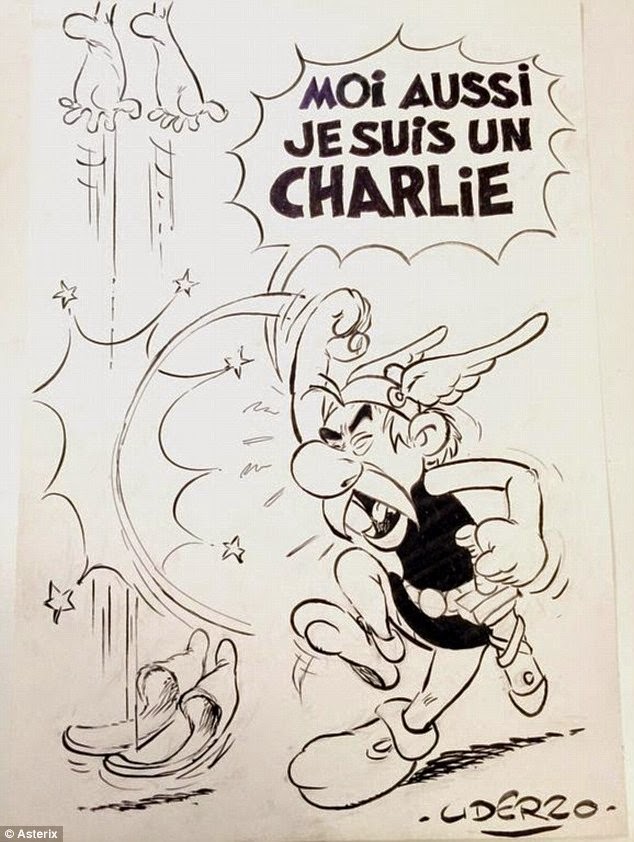
In the wake of the murders in Paris of Charlie Hebdo staff and those at a Kosher supermarket, along with French Police killed in the line of duty, there has yet again been an outpouring of utter bulls*t as those ignorant of the background and issues reveal their prejudices.
State Representative John Bennet (Tulsa, Oklahoma), yet again confused Islam with Muslims and he used both terms in a very general sense.
Islam is what Muslims practice, and perhaps the diagram below may help?

- In this inverted pyramid, there is an increasing level of interpretation in higher layers. That interpretation changes over time, as do the norms of any society. There are obviously feedback links between Personal and Societal interpretations.
- Over centuries there has been general movement to more peaceful interpretations but a small number of fundamentalists want to drag it back to the past, by creating division both between and within societies, polarising groups, delaying or reversing any integration.
- The Shariah, is the scholarly interpretation of Qur'an Hadith and Sunnah, providing legislation of what is allowed and penalties for disobedience.
- The Sunnah, is the things the prophet is said to have done, providing an example for believers.
- The Hadith are a collection of thousands of reported non-Quranic sayings of the prophet Mohammad and his close companions.
- The Qur'an is believed to be the word of Allah / God, revealed to Muhammad by the angel Gibreel (Gabriel).
As an aside, I mentioned that there are feedback links between personal interpretations and societal interpretations, simply because society is composed of individuals. However, (and this is more contentious) looking back over hundreds of years, it is evident that there has been feedback between all layers of this diagram. The Sunnah is derived from the Hadith, or those same sources. And there is no question that the Hadith were manufactured by various parties to suit political purposes and then filtered and culled based on their 'reliability'. There is also evidence that the Quran has changed over time - even the Hadith comment on this.
What we can clearly infer from this confusion, is that Islam means different things to different people in different times and places. Fifty shades of grey? No, about 1.6 billion shades of grey. And of course each individual believes their personal interpretation to be the correct one. These views can be generalised, grouped or categorised in a crude fashion, but this oversimplifies matters.
Meanwhile Boko Haram in North Eastern Nigeria, in the same week, have clocked up a death toll many, many times that of the Paris killings and no-one seems to bat an eyelid. No messages of support from the US or condolences from world leaders. Around the world in the same period there will have been countless other Islamist attacks and there are websites that track these.
Sometimes the attacks are simply seen as revenge or part of a local feud, but these attacks are all essentially ultimately intended to destabilise the local situation, creating division between and within communities, with the intention of bringing about changes whereby an Islamist or Islamic governance can be implemented. But, whose version of Islam....?
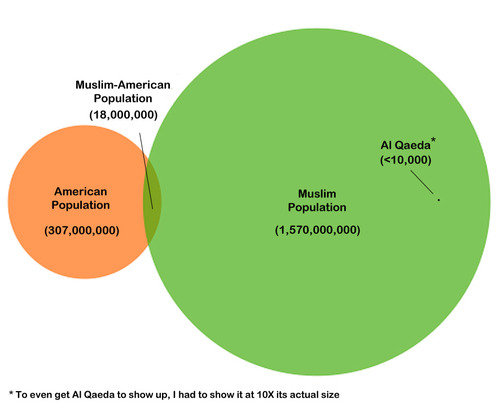
However, to finish up, lets get this in perspective. The vast majority of Muslims (and especially those in Western nations) do not wish to force their views upon other by violent means. Jonathan Blundell distributed a nice Venn diagram to show the context. Thanks John.
 |
 |
Wednesday, 7 January 2015
Reality is taboo (tapu) in NZ
Yet again, I have to express my disappointment with my fellow secular Kiwi countrymen and women.
You might expect that Kiwis would enjoy a meaningful debate or even a conversation about perennial topics such as philosophy, religion, politics and human rights.
Yet, it seems that their apparently intelligent and caring nature is merely a paper-thin veneer, hiding shallow, ignorant personalities that are incapable of dealing with nothing more challenging than discussion of TV shows, cars or sport.
I don’t know the reason, but I believe it must stem from their physically isolated geographic location. It seems to me that most Kiwis are hiding from something - I suspect it is from themselves. They appear to be incapable of honest reflection on their own individual lives and their place in the world; or if they are occasionally capable of it, they then run away and hide behind a mask of banal triviality. It is as if they are sleep-walking through life.
Generally, ex-muslims (deviants) such as myself, are all too painfully aware of the minute-by-minute onslaught of stupid behaviour around the world by Muslims and others. These behaviours are primarily driven by ignorance (wilful or otherwise) and it is painful to watch.
Yet Kiwis are painfully ignorant (innocent? naive?) of the situations facing others around the world and even locally. In my experience, when I have attempted to gently allude to some of the situations, I would have expected their natural curiosity to lead to questions and a useful conversation. However, the conversation simply gets diverted or shut down - sometimes quite aggressively. In the worst case, a gentle attempt at opening discussions with Kiwis sadly led to complete and immediate termination of what had previously been good working relationships.
The other alternative Kiwis tend to adopt is a ridiculous metaphorical 'cone of silence' whereby anything that could potentially lead to a conversation about known taboo topics is nipped in the bud, deftly steered away from or whispered about almost out of earshot.
Perhaps Berger and Luckmann's concept of 'recipe knowledge' is applicable here. A sudden exposure to a different reality is not something Kiwis have a pre-defined response or recipe for.
In my experience, the British on the other hand have quite a different set of behaviours, they have a much broader outlook and set of experiences from which to work and they'll dive straight in, ask questions and have a debate.
New Zealand needs to wake up and join the rest of the world. They need to be face their fears, get informed and educated (not indoctrinated or propagandised) read a bunch of books, ask questions and seek real answers.
Maybe I'm asking too much.
Back in 1967 Berger and Luckmann described reality as being a social construct with people inhabiting parallel universes; physically in the same location but interpreted differently by people based on their prior socialisation. What we're seeing is exactly this. How do we bridge the gaps between those universes?
The book describes 'two applications of universe maintaining conceptual machinery : therapy and nihilation'. I had identified these two things myself and had been referring to them in my own metaphorical slang as the egg-shellers and the barge-polers.
The egg-shellers (therapists) will gently tiptoe around the deviant, remaining ever sensitive to anything that might upset things and gently try to rehabilitate the deviant, bringing them back into line; the 'cone of silence' being one of these methods.
On the other hand the barge-polers (nihilists) will try to destroy the deviant in often an often quite unsubtle manner - but will not come close enough to develop a relationship or risk becoming tainted with deviancy; it will all be done at a distance using a metaphorical barge-pole. These people are often too cowardly to engage in direct conversation or debate, but will intimidate and bully indirectly ensuring their message gets across, but not saying or doing anything that could be responded to directly. A direct message might expose them to a direct response or even a rational adult conversation - and that would never do!
New Zealand and the rest of the world, desperately needs some rational bridge-building, to open up viewpoints between these various universes.
You might expect that Kiwis would enjoy a meaningful debate or even a conversation about perennial topics such as philosophy, religion, politics and human rights.
Yet, it seems that their apparently intelligent and caring nature is merely a paper-thin veneer, hiding shallow, ignorant personalities that are incapable of dealing with nothing more challenging than discussion of TV shows, cars or sport.
I don’t know the reason, but I believe it must stem from their physically isolated geographic location. It seems to me that most Kiwis are hiding from something - I suspect it is from themselves. They appear to be incapable of honest reflection on their own individual lives and their place in the world; or if they are occasionally capable of it, they then run away and hide behind a mask of banal triviality. It is as if they are sleep-walking through life.
Generally, ex-muslims (deviants) such as myself, are all too painfully aware of the minute-by-minute onslaught of stupid behaviour around the world by Muslims and others. These behaviours are primarily driven by ignorance (wilful or otherwise) and it is painful to watch.
Yet Kiwis are painfully ignorant (innocent? naive?) of the situations facing others around the world and even locally. In my experience, when I have attempted to gently allude to some of the situations, I would have expected their natural curiosity to lead to questions and a useful conversation. However, the conversation simply gets diverted or shut down - sometimes quite aggressively. In the worst case, a gentle attempt at opening discussions with Kiwis sadly led to complete and immediate termination of what had previously been good working relationships.
The other alternative Kiwis tend to adopt is a ridiculous metaphorical 'cone of silence' whereby anything that could potentially lead to a conversation about known taboo topics is nipped in the bud, deftly steered away from or whispered about almost out of earshot.
 |
| Get Smart - Cone of Silence |
Perhaps Berger and Luckmann's concept of 'recipe knowledge' is applicable here. A sudden exposure to a different reality is not something Kiwis have a pre-defined response or recipe for.
In my experience, the British on the other hand have quite a different set of behaviours, they have a much broader outlook and set of experiences from which to work and they'll dive straight in, ask questions and have a debate.
New Zealand needs to wake up and join the rest of the world. They need to be face their fears, get informed and educated (not indoctrinated or propagandised) read a bunch of books, ask questions and seek real answers.
Maybe I'm asking too much.
Back in 1967 Berger and Luckmann described reality as being a social construct with people inhabiting parallel universes; physically in the same location but interpreted differently by people based on their prior socialisation. What we're seeing is exactly this. How do we bridge the gaps between those universes?
The book describes 'two applications of universe maintaining conceptual machinery : therapy and nihilation'. I had identified these two things myself and had been referring to them in my own metaphorical slang as the egg-shellers and the barge-polers.
The egg-shellers (therapists) will gently tiptoe around the deviant, remaining ever sensitive to anything that might upset things and gently try to rehabilitate the deviant, bringing them back into line; the 'cone of silence' being one of these methods.
On the other hand the barge-polers (nihilists) will try to destroy the deviant in often an often quite unsubtle manner - but will not come close enough to develop a relationship or risk becoming tainted with deviancy; it will all be done at a distance using a metaphorical barge-pole. These people are often too cowardly to engage in direct conversation or debate, but will intimidate and bully indirectly ensuring their message gets across, but not saying or doing anything that could be responded to directly. A direct message might expose them to a direct response or even a rational adult conversation - and that would never do!
New Zealand and the rest of the world, desperately needs some rational bridge-building, to open up viewpoints between these various universes.
Sunday, 7 December 2014
What is the matter with these people?
Muslims in NZ are apparently suffering a greater incidence of negative discrimination, verbal abuse and psychological pressure in recent days. A recent article in the Dominion Post highlighted the issue, as did Radio New Zealand.
The negativity directed at NZ Muslims is not unique to NZ and not a new thing. We have suffered varying degrees of the same appalling nonsense since 9/11 2001 all around the world. The recent spate is presumably generated as a result of the media reporting ISIL executions of Westerners and / or media reporting of the Countering Terrorist Fighters Legislation Bill, that is making its way through Parliament now. Both of these put Muslims in a bad light, as terrorists or potential terrorists.
What this really shows, is evidence of previous and ongoing poor reporting and bias in NZ news media. This is combined with, and also partially responsible for, utter ignorance in the NZ public domain about what most Western Muslims believe or stand for.
I'm sure that the idiots who direct abuse at Muslims are unaware that is is Muslims themselves who have by far suffered the greatest number of casualties at the hands of ISIL, and continue to do so. The Western hostages killed represent a tiny fraction of the total - but they get relatively huge amounts of news coverage in NZ and the West. This is precisely the aim of the terrorists. Why are we playing their game?
NZ reporting bias was again seen in recent coverage of Unites States police brutality. This is a critical issue - if you cannot trust the law to be enforced fairly where does it leave you? We all expect better of the US. However, I would suggest the uprising has been given greater airtime and focus in NZ because it is an event in a country seen as Western and 'white' by NZ and therefore more important than events in countries populated by brown people. Tragedies and struggles of brown people around the world are ignored by NZ while we focus on the everyday utterly trivial events in NZ.
Where are the values of New Zealanders? We seem to be living in an unthinking uncaring, inward looking society, driven by greed and self-interest.
Certainly #blacklivesmatter ... brown lives matter too. All lives matter. Where is the compassion? NZ is being manipulated by the media, and not in a good way.
The negativity directed at NZ Muslims is not unique to NZ and not a new thing. We have suffered varying degrees of the same appalling nonsense since 9/11 2001 all around the world. The recent spate is presumably generated as a result of the media reporting ISIL executions of Westerners and / or media reporting of the Countering Terrorist Fighters Legislation Bill, that is making its way through Parliament now. Both of these put Muslims in a bad light, as terrorists or potential terrorists.
What this really shows, is evidence of previous and ongoing poor reporting and bias in NZ news media. This is combined with, and also partially responsible for, utter ignorance in the NZ public domain about what most Western Muslims believe or stand for.
I'm sure that the idiots who direct abuse at Muslims are unaware that is is Muslims themselves who have by far suffered the greatest number of casualties at the hands of ISIL, and continue to do so. The Western hostages killed represent a tiny fraction of the total - but they get relatively huge amounts of news coverage in NZ and the West. This is precisely the aim of the terrorists. Why are we playing their game?
NZ reporting bias was again seen in recent coverage of Unites States police brutality. This is a critical issue - if you cannot trust the law to be enforced fairly where does it leave you? We all expect better of the US. However, I would suggest the uprising has been given greater airtime and focus in NZ because it is an event in a country seen as Western and 'white' by NZ and therefore more important than events in countries populated by brown people. Tragedies and struggles of brown people around the world are ignored by NZ while we focus on the everyday utterly trivial events in NZ.
Where are the values of New Zealanders? We seem to be living in an unthinking uncaring, inward looking society, driven by greed and self-interest.
Certainly #blacklivesmatter ... brown lives matter too. All lives matter. Where is the compassion? NZ is being manipulated by the media, and not in a good way.
Subscribe to:
Posts (Atom)